
Composting at home is one of the most practical and rewarding things a homeowner can do for the garden, for the environment, and for the household’s relationship with the food and yard waste that currently goes straight to the landfill. Despite its reputation for complexity, composting at home is genuinely accessible to any homeowner with outdoor space, a minimal investment in a bin or dedicated area, and a basic understanding of what to add and what to avoid. The end result is a resource that gardeners routinely pay significant amounts for at garden centers.
How Composting at Home Actually Works
Composting is decomposition managed by the homeowner rather than left to chance. Organic materials break down through the activity of bacteria, fungi, and microorganisms that need four things: carbon, nitrogen, moisture, and oxygen. Getting the balance approximately right is all that separates productive compost from a pile that just sits there. Carbon-rich materials, “browns”, include dry leaves, cardboard, straw, and paper. Nitrogen-rich materials, “greens”, include food scraps, fresh grass clippings, coffee grounds, and plant trimmings. The general guidance for composting at home is roughly three parts browns to one part greens by volume. A pile too heavy on greens becomes wet and smelly; too heavy on browns and it breaks down very slowly. The pile should feel like a wrung-out sponge. Turning every one to two weeks introduces oxygen that accelerates decomposition and prevents the anaerobic conditions that produce odor. A regularly turned pile at the right moisture level can produce finished compost in two to three months.
Setting Up Composting at Home in Your Yard
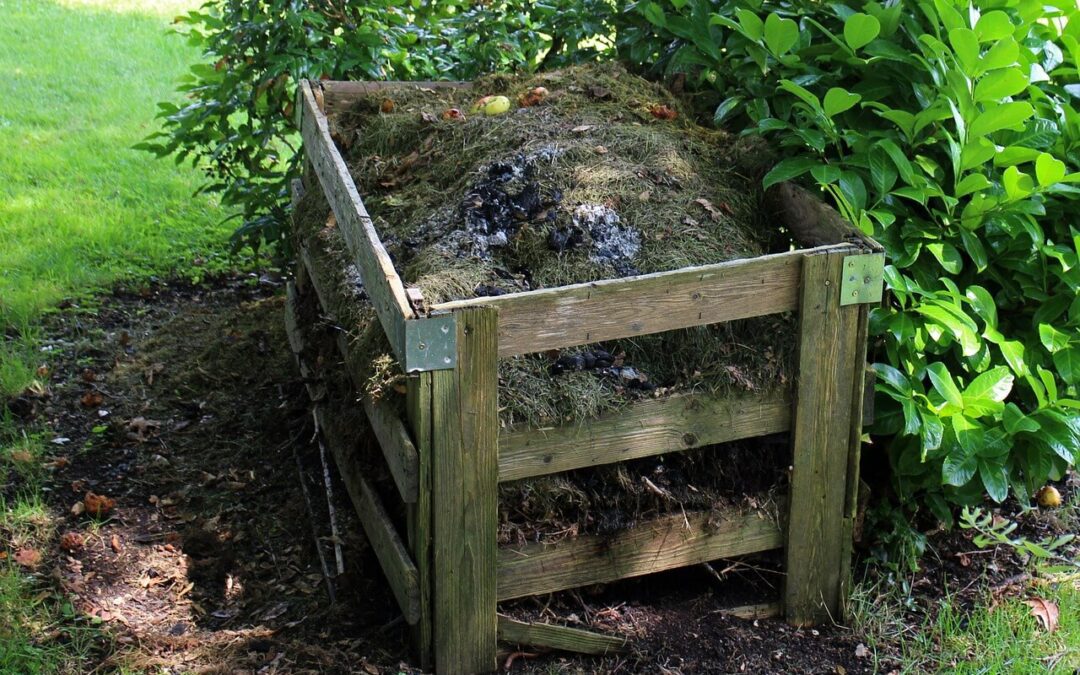
The first practical decision in composting at home is where and how to contain the pile. Open piles work but are harder to manage. A dedicated bin keeps materials contained, maintains heat more effectively, and presents a tidier appearance. A bin of at least three cubic feet is the minimum size for generating enough internal heat to speed decomposition. A spot with partial sun warms the pile without drying it too quickly, and proximity to the kitchen and garden reduces the friction of adding to and using the compost regularly. Two-bin systems are a step up worth the additional space for many homeowners. One bin receives fresh materials while the second finishes decomposing; finished compost is always available while active decomposition continues. Turning is also easier, since you’re moving material from one bin to the other.
What to Add and Avoid When Composting at Home
The list of what can go in a compost pile is longer than most homeowners realize. Fruit and vegetable scraps, coffee grounds, eggshells, tea bags, grass clippings, leaves, garden trimmings, cardboard torn into pieces, newspaper, and hair all make excellent inputs. What to avoid is equally important for composting at home to stay odor-free and pest-resistant. Meat, fish, dairy, and oily foods attract rodents and create significant odor; these go in the trash. Pet waste can contain pathogens and should not go in home compost. Diseased plants and those treated with persistent herbicides can carry problems into the finished compost. Invasive weeds that have gone to seed are better disposed of in yard waste collection, where the heat generated may not be sufficient to kill viable seeds.
Frequently Asked Questions (FAQs)
How long does composting at home take to produce usable compost?
An actively managed pile, turned weekly, kept moist, with the right carbon-to-nitrogen ratio, can produce finished compost in two to three months. A pile that receives materials but minimal management typically takes six months to a year.
Do I need a special bin for composting at home?
Any container that allows airflow, retains moisture, and keeps pests out works. DIY options from pallets, wire mesh, or untreated lumber are effective. Purchased plastic bins with lids and ventilation slots work well for smaller yards or HOA situations. The most important factors are size, at least three cubic feet, and access for turning and harvesting. Tumbler-style composters require no turning and work well in smaller spaces.
Can I compost in a small yard or apartment?
Composting at home is possible in small outdoor spaces with a compact bin or tumbler. For apartments with no outdoor space, vermicomposting, composting with worms in a contained indoor bin, processes food scraps efficiently without outdoor space. Worm bins are odorless when managed correctly, fit under a kitchen counter or in a closet, and produce both finished compost and liquid fertilizer.
Why does my compost pile smell bad and how do I fix it?
A pile smelling like ammonia has too many greens; add more browns and turn it. A pile smelling like rotten eggs is too wet and lacking oxygen; add dry browns, turn thoroughly, and allow it to dry. A well-balanced, actively managed pile has a pleasant earthy smell. Most odor problems in composting at home are resolved by adjusting the carbon-to-nitrogen ratio and turning regularly.
What do I do with finished compost?
Work it into garden beds at two to four inches before planting, use it as a top dressing around established plants, mix it into potting soil, or spread a thin layer over lawn areas to improve soil structure. Compost improves drainage in clay soils, moisture retention in sandy soils, and feeds soil microorganisms that support healthy plant growth. Households that compost consistently often produce more than the garden can use; the excess makes excellent gifts for gardening neighbors.
Cal Home Inspection provides home inspections in Sacramento, CA, and the surrounding areas. Contact us to request our services.